
1 Hue sour shrimp – Ambassador of ancient capital cuisine
If there is a dish chosen to represent the sophistication and sophistication of Hue cuisine, it must definitely be sour shrimp. Hue sour shrimp is not only a famous traditional dish or dipping sauce but also a symbol and pride of this land. With its eye-catching red-pink color and complex flavor, Hue sour shrimp is considered the most complete culinary “ambassador” of the ancient capital and is the gift from the rainy land that is most loved and sought after by many tourists.
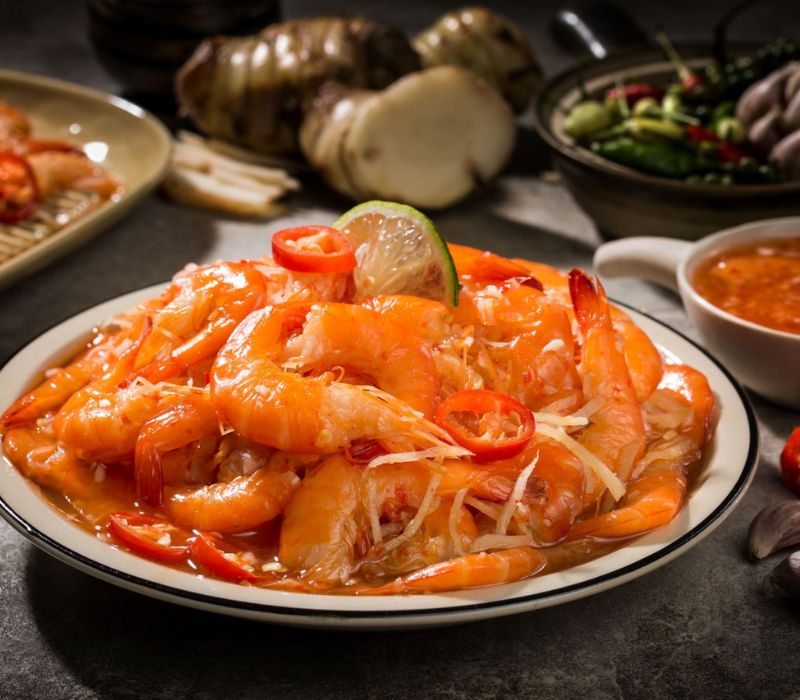
Hue sour shrimp impresses with its harmonious flavor between sour, spicy, salty and sweet, along with a rustic cooking method that is hard to find in other dishes. Illustration photo: VinWonders
This dish has become an indispensable part of the daily meals of Hue people. From cozy family feasts to luxurious parties, the appearance of sour shrimp always brings the perfect balance to the taste. Moreover, for tourists visiting, choosing to buy Hue sour shrimp as gifts for relatives and friends has become a cultural feature, because its flavor encapsulates the soul and love of the cuisine here.
2 Discover the characteristics of Hue sour shrimp dish
The appeal of Hue sour shrimp lies in the ingenious blend of flavors, creating an unforgettable culinary symphony, completely different from other sour sauce dishes.
2.1 Unique flavor of Hue sour shrimp: A multi-layered blend of flavors
Hue sour shrimp is loved for its unique flavor, including a harmonious combination of sour, salty, sweet, fragrant and rich. This is not a harsh sour or salty taste, but a harmony and gentleness that makes the eater feel attractive. When enjoying, diners will feel the wonderful combination of many flavors at the same time: the sweet and light fatty taste of fresh shrimp meat, the characteristic spicy taste of chili, the warm, characteristic aroma of galangal and garlic, along with the rich, aromatic texture of the sticky rice used for fermentation.
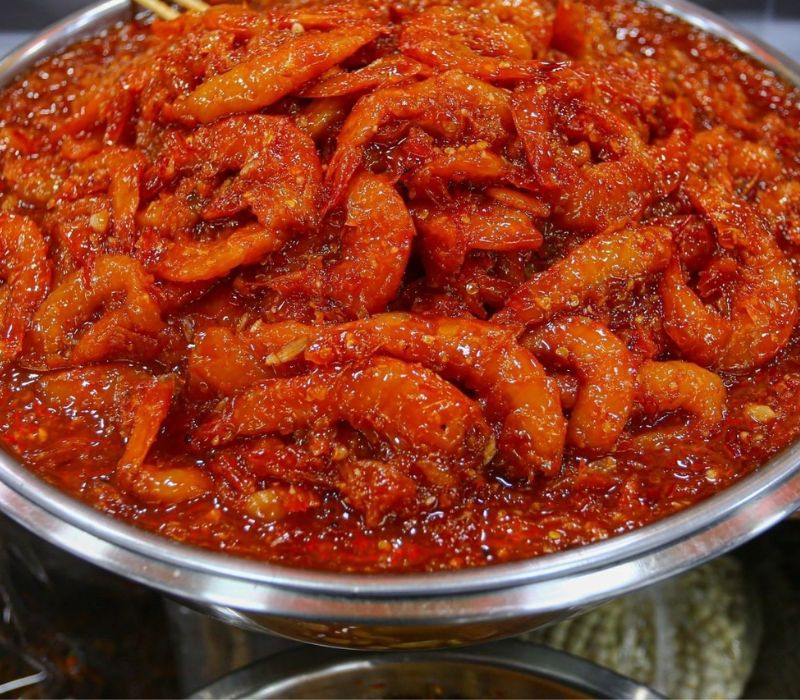
Hue sour shrimp has an eye-catching brick-red appearance. When eaten, you can clearly feel the sweet, chewy taste of fresh shrimp. Illustration photo: Halotravel
Finished sour shrimp always has a natural red color, vibrant and quite eye-catching. What makes this dish classy is that the shrimp meat still retains its sweet and chewy taste. In addition, many establishments also add shredded papaya that is thoroughly soaked and crunchy when chewed, bringing an enjoyable feeling when eating. Compared to regular shrimp paste with a strong flavor, sour shrimp has a much more harmonious and mild flavor, easily conquering even picky diners.
2.2 Hue sour shrimp – Outstanding feature compared to other types of sour sauce
On the culinary map of Vietnam, many coastal regions such as Thanh Hoa, Nghe An, or Ben Tre also have sour fish sauce made from shrimp or shrimp, but they are often prepared in a rustic method, focusing on saltiness and sourness. Hue sour shrimp is different, it is delicately processed in the royal style, going through a sophisticated process of selecting ingredients and fermenting. For that reason, Hue sour shrimp is not just a fish sauce but has been upgraded to a “royal dipping sauce,” carrying within it the elegance and quintessence of Royal culinary culture.
3 Origin and history of Hue sour shrimp dish
The specialness of Hue sour shrimp is also told through an interesting historical origin story, associated with powerful women in the Nguyen court. Few people know that the famous sour shrimp dish of the ancient capital of Hue originates from the land of Go Cong (Tien Giang).
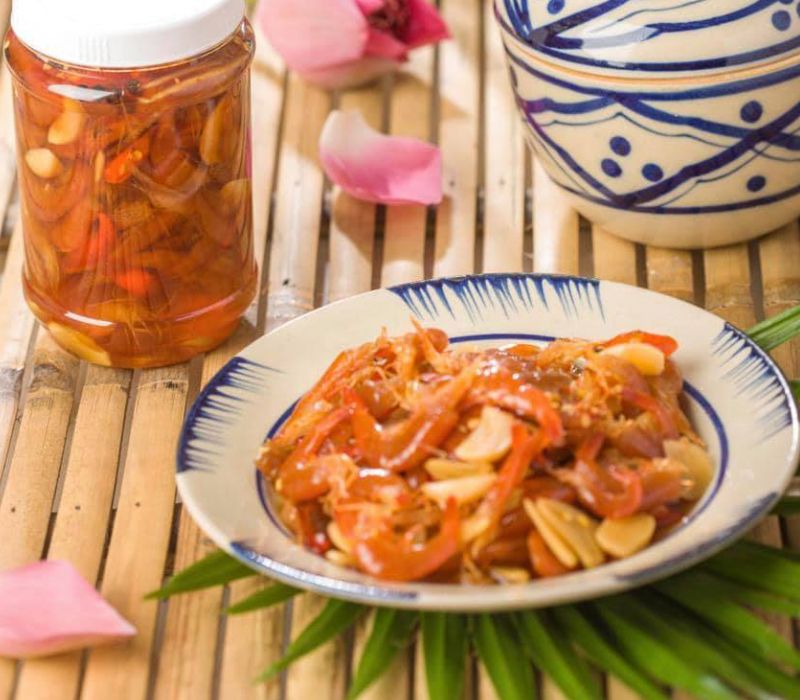
Few people know that Hue sour shrimp is a royal dish, associated with Queen Mother Tu Du. Illustration photo: VinWonders
Legend has it that the first person to introduce Go Cong sour shrimp paste into a royal delicacy was Queen Mother Tu Du. She brought this hometown dish with her when she followed her father to Hue and was admitted to the palace in the first half of the 19th century, during the reign of King Thieu Tri. The dish quickly attracted the love of King Thieu Tri and later King Tu Duc thanks to the delicious, unique flavor and balance it brings. It was the journey from the southern lands to the Hue Royal Court that helped this rustic dish be refined and enhanced, becoming a precious “King’s Tien” dish.
After being received in the palace, sour shrimp was processed to better suit the culture and taste of the Hue Royal Court. The sophistication and meticulousness in the process of making sour shrimp was taught to the female mandarins and servants by Queen Mother Tu Du herself.
Thereby, the dish has gradually been popularized among the people, becoming a part of Hue culinary culture. Although originating from Go Cong, after centuries of development and refinement, the reputation of Hue sour shrimp has become much greater than that of its motherland, widely recognized throughout the country and internationally. Today, Hue boasts hundreds of sour shrimp production establishments and many nationally recognized brands, affirming the solid position of this dish in the hearts of Vietnamese people.
4 The journey to creating standard jars of Hue sour shrimp paste
To get a jar of sour shrimp that reaches the sophistication and taste of the Ancient Capital, Hue people have followed an extremely meticulous processing process, starting from the selection of ingredients.
4.1 Careful material selection process
The main ingredient that determines the quality of sour shrimp is shrimp. People often choose ground shrimp or white shrimp for processing, with ground shrimp often being preferred because they live in fresh water, providing a rich sweetness and less fishy smell. The top criteria for delicious sour shrimp paste is that the shrimp must be fresh, alive, shake hard, have a hard shell, firm meat, and a clear white body. In particular, river shrimp or brackish water shrimp, especially shrimp from the famous “Cau Hai freshwater” area, are often the most optimal choice.
Accompanying spices also play an equally important role, including galangal, garlic, and chili, helping to balance the flavor and create warmth. To activate the fermentation process and create a chewy texture, people use cold ground rice or sticky rice. In addition, pure fish sauce, 40-degree white wine, sugar, and sometimes honey are indispensable to create beautiful color and consistency.
4.2 The processing process is sophisticated and requires patience
The process of processing sour shrimp is an art, requiring patience and experience. Fresh shrimp are cut off their heads, black veins removed, and washed under running water. After that, the shrimp is soaked in white wine to completely eliminate the fishy smell and help the shrimp meat become firmer and crispier. After soaking in wine, the shrimp are taken out and dried in the sun for about 3 hours. This step helps the shrimp increase their toughness and ferment more easily.
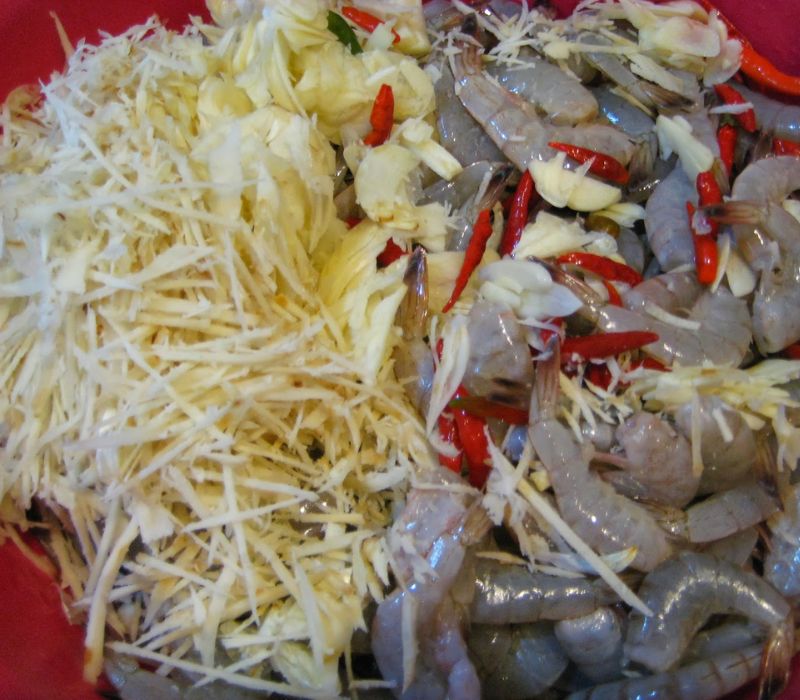
The process of processing Hue sour shrimp requires the chef to have experience in making fish sauce and fermenting. Illustration photo: Tico Travel
Shrimp are mixed well with a mixture of crushed garlic, galangal, and chili, and add cold ground rice or sticky rice for natural fermentation. At this time, the chef also cooks fish sauce and sugar and then lets them cool completely. This is an extremely important step, because if the fish sauce is still hot, it will ruin the fermentation process of the shrimp.
After that, the shrimp mixed with spices is placed in a clean plastic or glass jar, then poured with cooled soaking water to cover the shrimp. To ensure that the shrimp ferments evenly and does not get moldy, people use a tightly compressed blister and close the lid to avoid air getting in as much as possible. After that, the shrimp jar is incubated and dried in the sun for about 5-7 days, or left near the stove for 10-15 days. When the shrimp turns an eye-catching pink-red color, it’s a sign that the shrimp is “cooked” and ready to enjoy. After the shrimp is cooked, the maker can add shredded papaya and a little sugar, soak it for another 1-2 days so that the papaya absorbs the spices, creating a characteristic crunchy flavor.
5 Experience enjoying Hue sour shrimp
Enjoying Hue sour shrimp is not just eating, but also an art of combining taste, requiring the blending of many ingredients to achieve perfect balance. The most authentic and delicious way to enjoy Hue sour shrimp is to blend sour shrimp with the “classic” trio: thinly sliced boiled pork and bean sprouts or sweet and sour pickles.
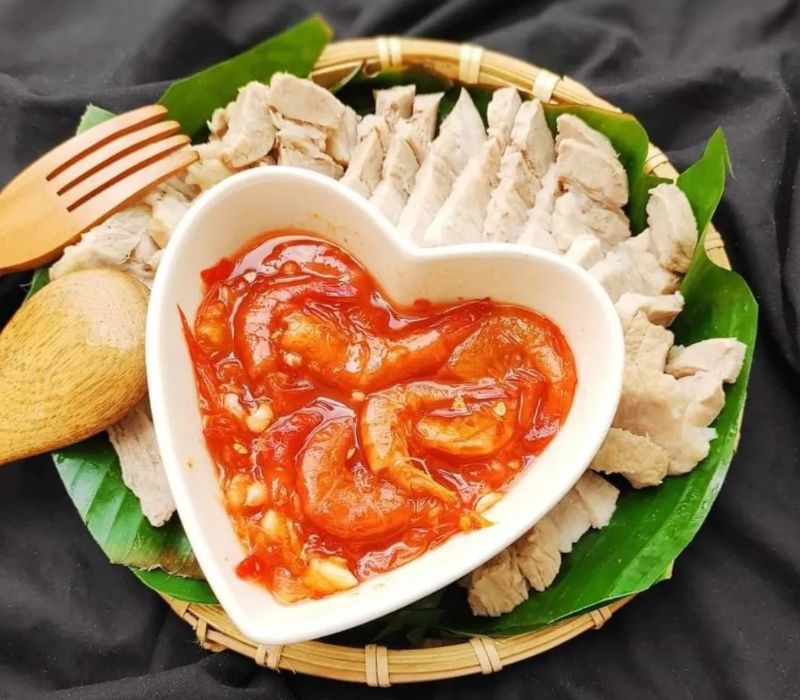
Hue people often eat sour shrimp with boiled pork belly, adding a little bean sprouts and melon to add flavor. Illustration photo: Codohue.vn
Boiled pork has a fatty taste, sour and spicy shrimp is sweet and salty, and bean sprouts or melon brings a crunchy, refreshing taste. This combination creates a harmonious balance in the taste, helping the dish not to be boring, but on the contrary, stimulating the taste buds to the maximum.
In addition, Hue people often eat sour shrimp with hot rice, especially on cold days. In addition, sour shrimp can also be used to dip boiled pork, or added to salads to increase acidity, spiciness and rich flavor.
To increase the freshness and richness, this dish is also very suitable when eaten with a variety of raw vegetables such as figs, pineapples, sliced green bananas, herbs, cinnamon, along with crispy rice paper. The sour shrimp dish can even be eaten with sticky rice, banh chung, or vermicelli, proving the versatility of Hue people’s cuisine. In particular, sour shrimp mixed with shredded green papaya is considered a delicious and popular way to eat daily rice in the Ancient Capital.
6 Top reputable addresses to buy sour shrimp in Hue
For tourists, buying authentic Hue sour shrimp as a gift is an indispensable part of the journey to discover the ancient capital’s cuisine. Visitors can find Hue sour shrimp at local specialty stores or in traditional markets spread throughout Hue, of which Dong Ba Market is a specialty paradise with many famous sour shrimp shops.
Below is a list of prominent brands and addresses trusted by locals and tourists:
– Cori sour shrimp paste 184 Tang Bat Ho – Reference price: From 80,000 VND – 150,000 VND/jar.
– Ba Due Sour Shrimp Paste, Chuong Duong Street, Dong Ba Market – Reference price: From 60,000 VND – 120,000 VND/jar.
– Nhat Phi Sour Shrimp 57 Dinh Cong Trang – Reference price: From 70,000 VND – 120,000 VND/jar.
– Tam Duc Sour Shrimp Paste sold at major markets and supermarkets in Hue – Reference price: From 100,000 VND/bottle.
– Tan Loc Sour Shrimp 39 Hai Ba Trung – Reference price: From 60,000 VND – 120,000 VND/jar.
– Trong Tin Sour Shrimp Paste 21 Dang Tran Con – Reference price: From 100,000 VND – 130,000 VND/jar.
– Auntie Can’s Sour Tom Sauce at many stores and traditional markets in Hue – Reference price: From 60,000 VND/jar.
– Sour Tomato To Viet 95 Chi Lang – Reference price: From 60,000 VND/jar.
Hue sour shrimp is a typical culinary symbol, harmoniously combining the quintessence of folk and royal cuisine. The sophistication in the processing process, from choosing fresh shrimp to fermenting and compressing the blister, has created a dish with a rich, unique flavor that cannot be found anywhere else. If you want to enjoy a delicious jar of sour shrimp, pack your suitcase and travel to Hue right away!
